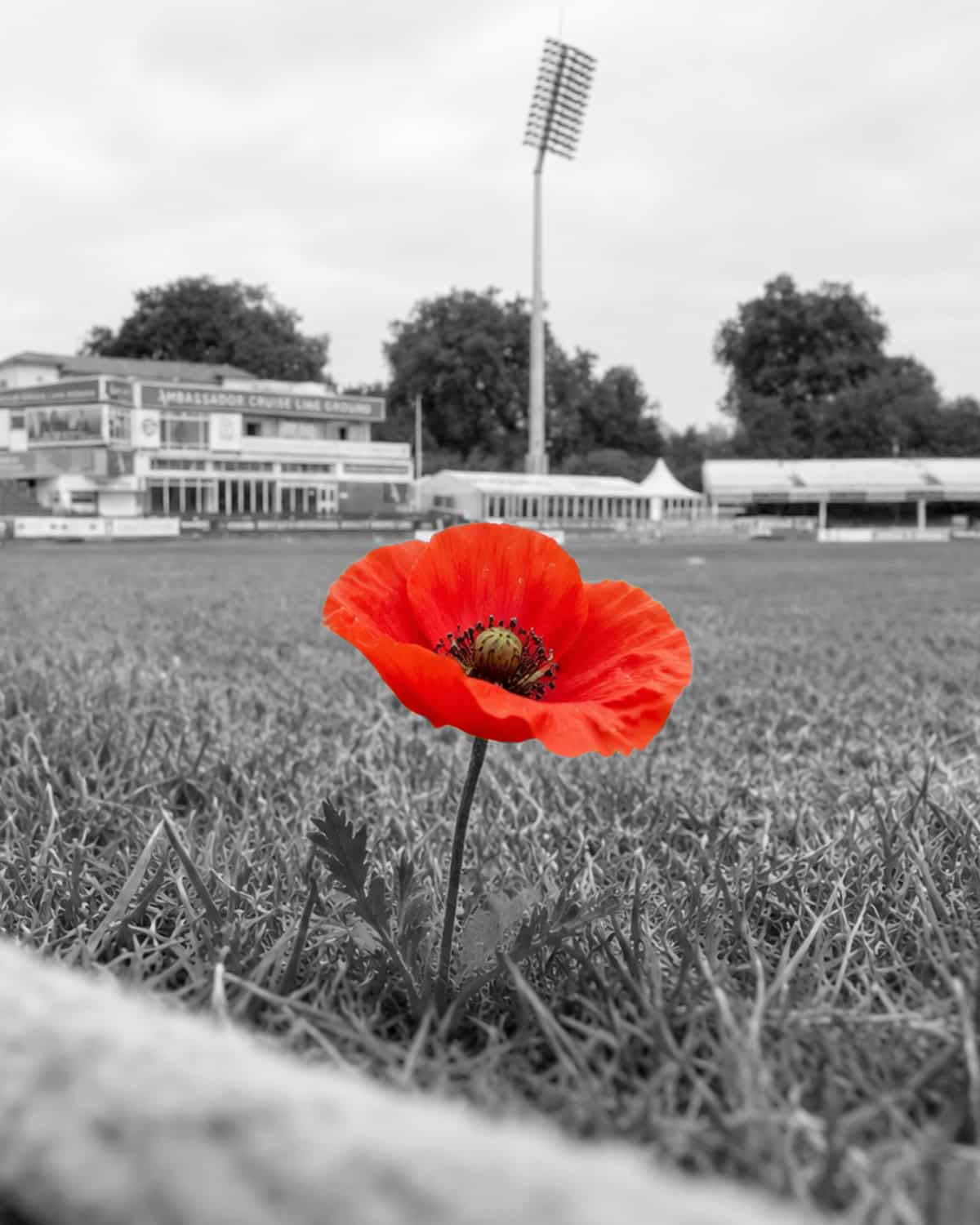
Essex Cricket Remembers and Honours Those Who Made the Ultimate Sacrifice.
As we mark Armistice Day on 11 November, Essex Cricket takes a moment to remember the former players and Club representatives who served their country during the two World Wars, including those who made the ultimate sacrifice.
As the Club celebrates its 150th Anniversary, we reflect on the lives and contributions of those who represented Essex on the cricket field before going on to serve their country. Their courage, dedication and sacrifice will never be forgotten.
Essex played six further matches before bringing their 1914 season to a close at Weston-super-Mare on 01 September, defeating Somerset by 10 wickets. It proved to be the final appearance for Geoffrey Davies, who had scored a career-best 118 in the match. Just over a year later, he was killed in action on the Western Front, aged 22.
During the war, Essex continued to organise around 30 matches each season against local clubs and military opposition, helping to keep cricket alive during a difficult period.
Several players who had represented the County subsequently joined the armed forces. Among those who lost their lives were:
Commissioned into the 11th Battalion of the Essex Regiment, he rose to the rank of Captain before being killed while leading his men into action at Hulluch, France, on 26 September 1915, during the Battle of Loos.
His loss was particularly significant to Essex Cricket, with Wisden suggesting that, had he survived the war, he would have developed into an England player.
Second Lieutenant Henry David Keigwin (1881–1916)
Born in Lexden, Keigwin was a talented batsman who represented Essex in four first-class matches between 1906 and 1907. He also played for Cambridge University and was a prolific scorer during his time at Peterhouse College.
Having moved to Africa, he returned to Britain during the war and volunteered to serve with the Lancashire Fusiliers. He was killed near Thiepval on 20 September 1916, during the Battle of the Somme.
Lieutenant Frank Street (1870–1916)
Street made nine appearances for Essex between 1898 and 1899, scoring two half-centuries, including knocks of 76 against Leicestershire and 60 against Hampshire.
Despite being older than the usual age for military service, he volunteered to join the Royal Fusiliers. He was killed by a sniper's bullet at Ovillers-la-Boisselle, France, on 07 July 1916, aged 46.
Lieutenant Edward Charles Coleman (1891–1917)
Born in Southend, Coleman was an accomplished wicketkeeper who represented Essex in two matches during the 1912 season, taking a catch and completing a stumping.
He served with the Royal Fleet Auxiliary and was killed in action at Salonika on 02 April 1917, aged 25.
Second Lieutenant Ralf Hubert Robinson (1885–1917)
Robinson kept wicket for Essex on four occasions in 1912 before joining the Rifle Brigade. He was awarded the Military Medal for his service but was subsequently killed near Ypres on 23 August 1917.
Major Douglas Tosetti (1877–1918)
A member of the Essex Second XI between 1900 and 1903, Tosetti served with the 8th Battalion of the Royal Berkshire Regiment.
Having previously been wounded at Loos, he continued to lead his men and was awarded the Military Cross. He was killed on 21 March 1918, the opening day of the German Spring Offensive.
Lieutenant James Valiant (1884–1917)
Valiant represented Essex in one first-class match in 1912 and was also a ground bowler. Commissioned into the Royal Welch Fusiliers, he was killed at Gaza, Palestine, on 28 October 1917.
Captain Arthur James Waugh (1887–1916)
Although listed among the Club's wartime cricketers, there is no record of Waugh making a first-class appearance for Essex. His brother, Herbert Percy, did represent the County.
Serving with the Royal Army Medical Corps, attached to the 1st Battalion of the North Staffordshire Regiment, he was killed on the Somme on 17 August 1916.
Rifleman Paul James Hilleard (1894–1915)
Hilleard played four Second XI matches in 1914 before joining the London Regiment (The Rangers). He was killed during the Second Battle of Ypres on 24 April 1915.
Captain Edward Roy Pallett (1895–1918)
Pallett featured in three Second XI matches in August 1914 before joining the Royal Fusiliers. He was killed at Aveluy Wood on 06 April 1918.
Second Lieutenant Cecil Victor Thompson (1897–1917)
Thompson was a talented all-round sportsman who represented the Second XI in four matches in August 1914, aged just 17. Serving with the East Lancashire Regiment, he was wounded in France and mentioned in dispatches before being killed near Basra, Mesopotamia (modern-day Iraq), on 06 February 1917.
Harold Mead (1895–1921)
Son of former Essex bowler Walter Mead, represented the County alongside his father on two occasions in May 1913. While serving with the Essex Regiment, he was severely wounded in 1915 and never fully recovered. He died at Epping on 13 April 1921, aged just 25.
The Club also lost two influential figures during the First World War: James Round and Charles Green, both of whom played significant roles in establishing and developing Essex County Cricket Club.
Round, who died on Christmas Eve 1916, aged 74, was instrumental in the Club's formation in 1876 and served as its Chairman and Treasurer. Green, who died three weeks earlier, aged 70, was another leading figure in Essex's early history, helping to shape the Club and provide vital financial support during difficult periods.
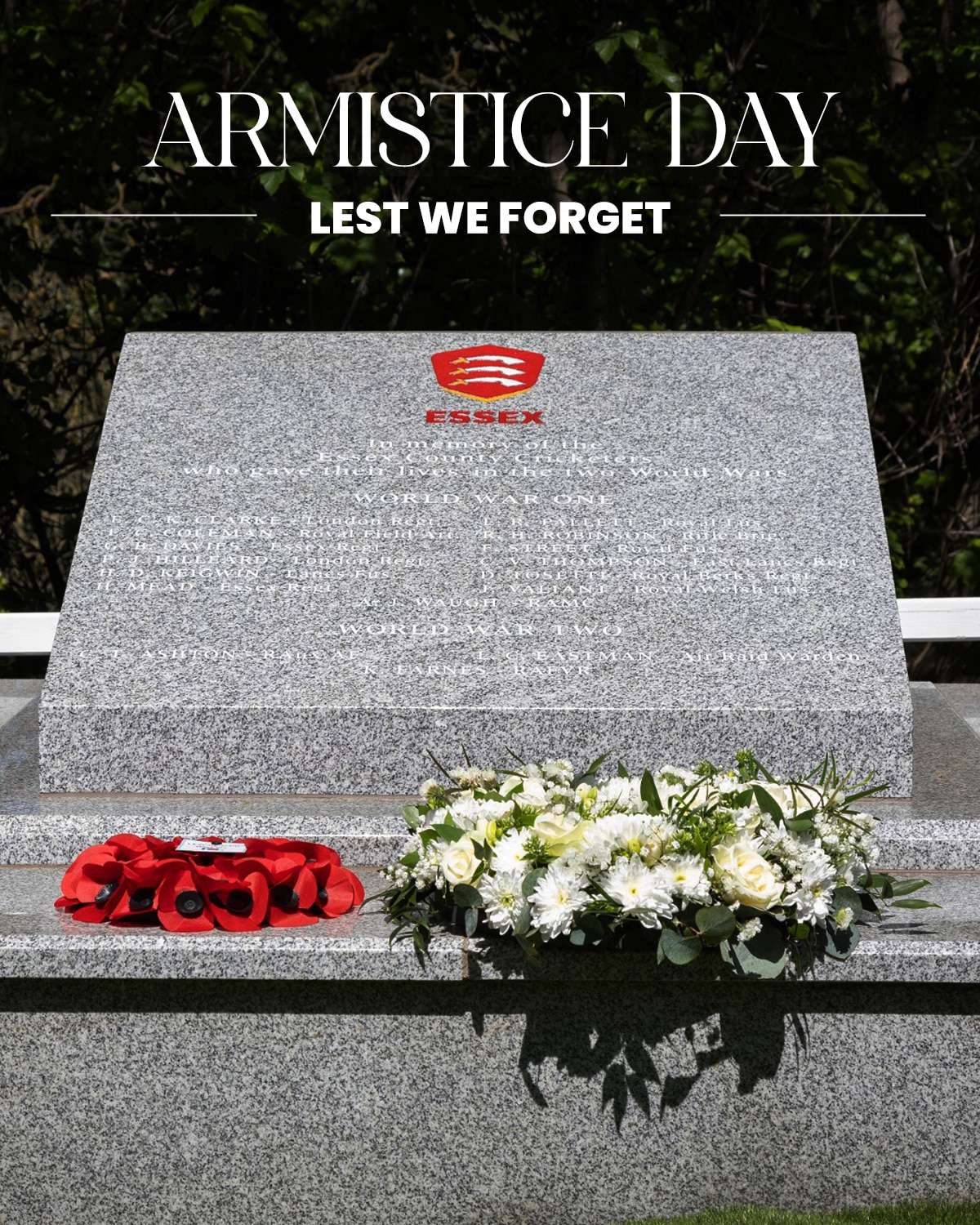
The outbreak of hostilities brought the domestic season to an abrupt end, with the Club's players and committee members joining the armed forces and contributing to the war effort.
Tragically, several figures connected with Essex Cricket would lose their lives during the conflict.
Standing at 6ft 5in, he was renowned for his pace and was regarded by many as one of the fastest bowlers of his generation.
Despite being beyond the age of compulsory military service, Farnes volunteered for the Royal Air Force in 1940 and trained in Canada before returning to Britain to become a night-flying pilot.
On 20 October 1941, just four weeks after returning to England, he was killed when his aircraft crashed during a night training flight from Chipping Warden airfield. He was 30.
His death was a tremendous loss to the cricketing world, and his contribution was later commemorated with a memorial plaque near the site of the crash.
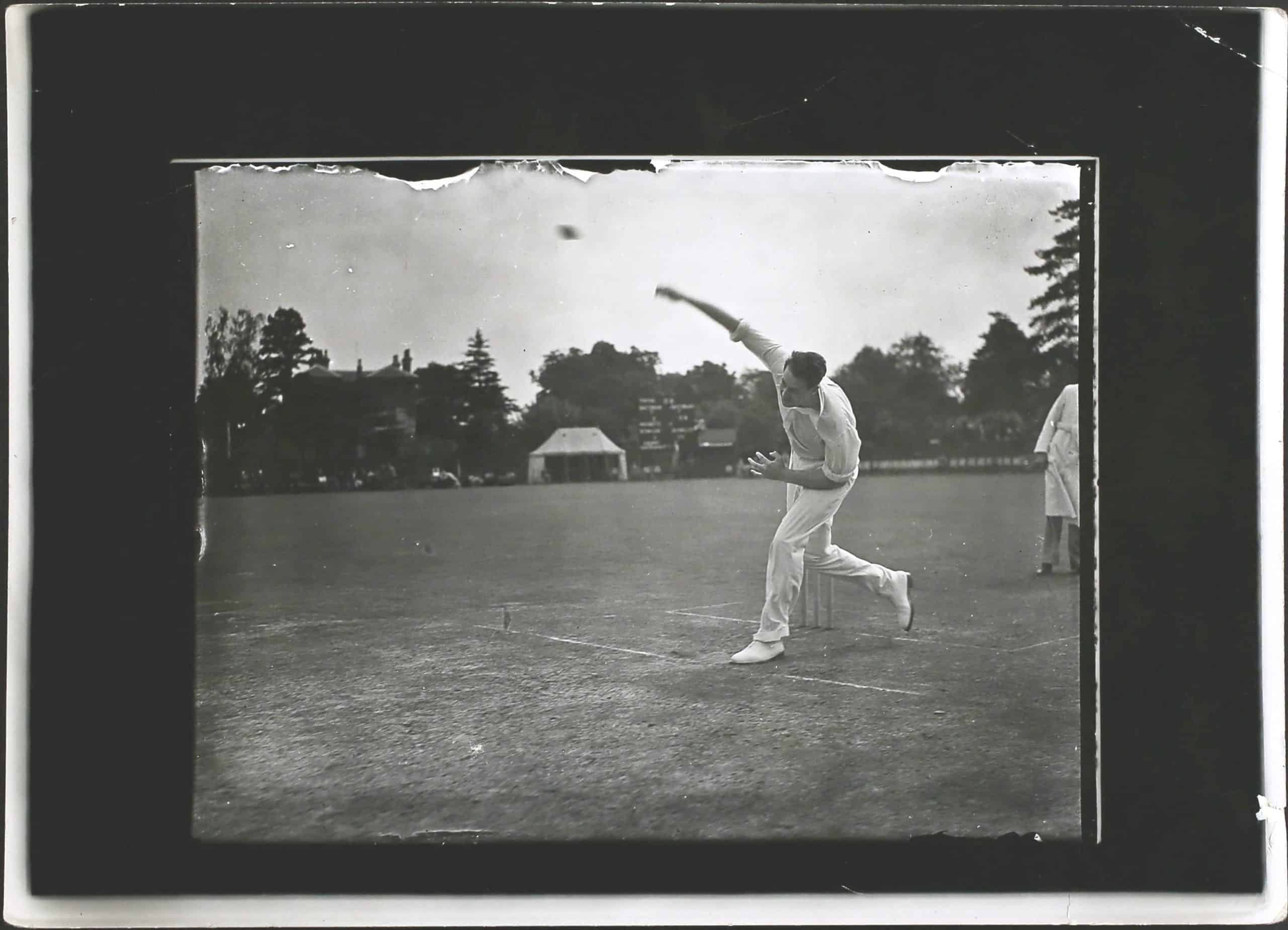
Lawrie Eastman (1898–1941)
Eastman played 442 matches for Essex between 1920 and 1939, scoring 12,965 runs and taking 975 wickets. An exceptionally versatile all-rounder, he batted in every position during his County career.
He had previously served on the Western Front during the First World War, earning both the Distinguished Conduct Medal and Military Medal.
During the Second World War, he served as an Air Raid Precautions (ARP) warden. After suffering severe shock when a high-explosive bomb exploded nearby, he was admitted to Harefield Sanatorium, where he died following an operation on 17 April 1941, aged 43.
Squadron Leader Claude Ashton (1901–1942)
A gifted all-round sportsman, Ashton represented Essex for 20 years, making 89 appearances for the Club. He also earned Cambridge University Blues in cricket, football and hockey, and represented England in amateur football.
Following the outbreak of war, he joined the Royal Air Force. On 31 October 1942, he was killed in a flying accident alongside fellow county cricketer R. de W.K.Winlaw.
Their deaths represented another tragic loss for Essex Cricket.
Reginald Taylor, who made 206 appearances for Essex between 1931 and 1939, joined the RAF and was awarded the Distinguished Flying Cross in 1940 for his service as an observer during the Dunkirk evacuation. He returned to cricket for one season in 1946 before eventually emigrating to South Africa.
Peter Smith, one of the county's greatest players, enlisted in the Army on 01 September 1939 and later became a Captain in the Essex Regiment. Posted to Egypt in 1943, he returned to enjoy further success with the Club, finishing his Essex career in 1951 with 1,610 wickets and 9,652 runs.
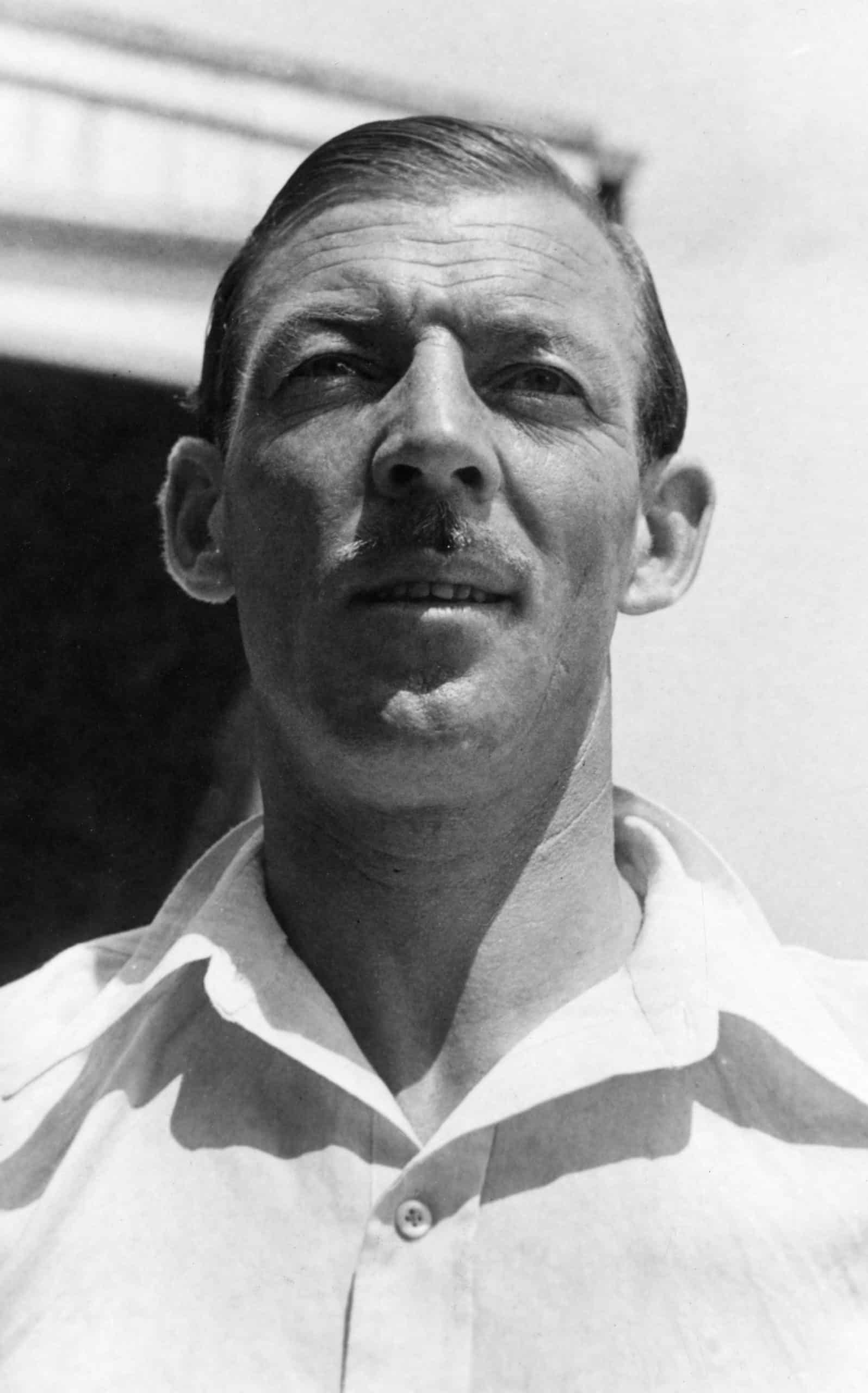
Club Secretary Brian Castor also served during the conflict. Captured following the fall of Singapore in 1942, he was held as a prisoner of war by the Japanese before returning safely to the UK in 1945.
Former Essex captain John Stephenson also served with distinction, commanding the 1/7th Battalion of the Middlesex Regiment between 1942 and 1945. He was awarded the Distinguished Service Order for his leadership during campaigns in North Africa, Sicily and Italy.
The Club arranged matches against local sides at various County grounds, with collections helping to support the war effort. One notable fixture took place at Lord's in 1941, when a combined Middlesex and Essex side faced a team representing Kent and Surrey, attracting an estimated 15,000 spectators on the opening day.
Coaching sessions for junior cricketers also continued throughout the conflict, helping to preserve the future of the game.
First-class cricket resumed in May 1945 with the Victory Tests, before County Championship cricket returned in 1946. However, the game would never be quite the same following the loss of so many talented players and individuals.
As Essex Cricket celebrates 150 years, we honour their service, remember their sacrifice and remain forever grateful.